
How dogs react to Christmas decorations and New Year's celebrations: interesting facts about their behavior and senses.
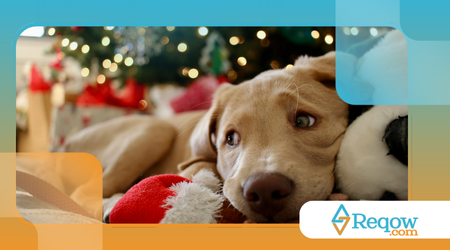
Have you ever stopped to think How dogs react to Christmas decorations. And what about the frenzy of New Year's celebrations?
Advertisements
The brightness, the scent of pine, and the characteristic hubbub of this time of year are part of our tradition.
For our four-legged friends, this festive season is a veritable symphony of intense, and sometimes confusing, sensory stimuli.
Understanding canine perception is crucial to ensuring a safe and peaceful end of the year for them.
Why do our dogs observe Christmas decorations with such curiosity?
Dogs use their sense of smell as their primary way of interpreting the world.
Advertisements
A natural Christmas tree, for example, brings a whole new and exciting array of forest scents indoors.
The texture and smell of the pine, perhaps mixed with the dust stored in the box of ornaments, are an invitation to exploration.
The floor of the house is suddenly covered in strange, hanging objects that deserve closer investigation.
Flashing lights or colorful balls, while attractive to our eyes, can be just another obstacle in a dog's daily routine.
Some pets, especially younger ones, may see them as new toys, initiating an innocent hunt for the lower ornaments.
This curiosity, however, requires our constant attention, as not all objects are safe for a dog's mouth.
How does a change in routine affect dogs' behavior at the end of the year? How do dogs react to Christmas decorations?
The arrival of the holiday season invariably disrupts the established routine of our pets.
More people are moving around the house, walking and meal times may change, and there is a significant increase in noise.
Dogs are creatures of habit, and predictability gives them emotional security.
When the house is filled with unfamiliar guests, the dog's reaction can range from exaggerated excitement to withdrawal and anxiety.
It is essential to create a "safe haven" for them, a quiet place where they can retreat when the party gets too loud.
Ensuring that the resting area remains untouched by strangers is a way of honoring this refuge.
What are the main dangers and stimuli in Christmas decorations for dogs?
There are many elements in decorations that can pose risks to your dog's health or well-being.
Christmas lights, when chewed, can cause electric shocks or intestinal blockages.
Chocolate, which is commonly found in baskets and decorated trees, is toxic to them.
Ingesting pine shavings or plants typical of the season, such as holly and mistletoe, can also be dangerous.
Read more: Why do some dogs have different colored eyes?
Canine senses perceive far more of the environment than we imagine.
Dogs don't have as colorful vision as we do, but they are masters at detecting movement and changes in light.
Their sense of smell, however, is incredibly acute, thousands of times superior to that of humans, making the strong scent of a scented candle or artificial snow spray overwhelming.

How to Protect Your Pet and Christmas Decorations from Mutual Accidents?
The key to a harmonious end of the year is prevention and intelligent environmental management.
Placing the most delicate and potentially dangerous ornaments on the highest parts of the tree is a simple and effective strategy.
Using specific repellents with scents that dogs dislike, applied to the base of the tree, can discourage them from approaching. Supervision is essential, especially with puppies.
For New Year's fireworks, which represent immense stress for many dogs, it is vital to keep them in a safe room with loud music (classical or reggae They tend to work) or with the television on to drown out the noise.
Look how interesting: Dogs with rare coat patterns
How dogs react to Christmas decorations. In a curious and destructive way, owners need to anticipate the mischief.
A 2024 behavioral study conducted by the American Veterinary Society of Animal Behavior (AVSAB) demonstrated that 68% of the dogs They exhibit signs of anxiety or fear during the peak of fireworks noise.
Why Socialization and Training are Crucial Before the Holidays and How Do Dogs React to Christmas Decorations?
Prior socialization of your dog to different sounds and people can mitigate the stress of celebrations.
If your pet is already used to a positive training routine, it will respond better to commands like "Leave it" or "Quiet" when tempted to explore a treat in the tree.
Repetition of training should be constant, creating a bond of trust.
Find out more: How to create a proper rest routine for hyperactive dogs
Consider the following analogy: For a dog, the Christmas tree is like a new playground with shiny, swaying objects
The responsible tutor must be the monitor of playground, establishing clear rules so that everyone can have fun safely.
This preventative approach is the best way to ensure a harmonious celebration.
Where and How to Keep Your Dog Calm During New Year's Eve?
The intense and unpredictable noise of fireworks on New Year's Eve is a primary source of phobia.
Dogs have much more sensitive hearing, making the volume and reverberation of fireworks unbearable.
The best place for the dog is an indoor room where the windows are closed and the curtains are drawn, minimizing the risk of accidents. flashes of light.
| Calming Strategies for Dogs on New Year's Eve | Effect on Pet |
| Crate Training | It offers a safe and familiar refuge. |
| Calm Music or White Noise | It helps to mask the external sounds of fireworks. |
| Stuffed Toy (Kong) | Distract the animal with an activity that requires focus and calmness. |
| Comfortable Physical Wrap (ThunderShirt) | Apply gentle pressure, relieving anxiety. |
This table summarizes practical approaches to help your pet. Remember, every animal is unique.
How dogs react to Christmas decorations. And the New Year's rush should be a priority for all homeowners.
By understanding their sensory and emotional needs, we transform potential chaos into moments of unity and peace.
What is more important than the comfort of your best friend at this time?
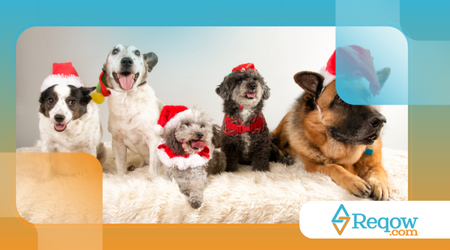
Celebrating the Holidays with Responsibility and Canine Affection
In short, the festive season requires an extra dose of patience and planning on the part of pet owners.
By recognizing that Christmas and New Year's represent a sensory and behavioral challenge for dogs, we can take proactive measures.
Protecting the ornaments, supervising interactions, and providing a safe haven are all acts of care.
Decorations are for our enjoyment, but the dog's safety is non-negotiable.
How dogs react to Christmas decorations. It's a matter of instinct and curiosity, but our reaction as owners is a matter of responsibility.
By ending the year with care and attention to your pet's specific needs, you ensure that the holiday memories are pleasant for everyone.
Frequently Asked Questions
Can dogs see flashing lights?
Yes, dogs are masters at detecting movement and variations in light, which makes flashing lights noticeable in their field of vision.
They also have a fusion rate of flicker Higher than human intelligence, which means they can perceive the flickering of lights more intensely and quickly.
Is it safe to give my dog leftover Christmas dinner?
It is not recommended. Many typical holiday foods, such as cooked bones, fatty meats, onions, garlic, raisins, and chocolate, are dangerous or toxic to dogs.
It's always best to offer safe and specifically formulated dog treats.
My dog is destroying the base of the Christmas tree. What can I do?
This is common behavior, especially in puppies. Try covering the base of the tree with a physical barrier or mat that it cannot easily move.
Apply citrus-scented sprays (which are harmless, but unpleasant for them) to the area and ensure that he has access to appropriate chew toys.