
Why does a dog stare so intently? See what it means.
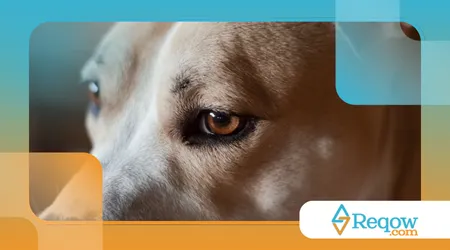
Many tutors wonder Why does a dog stare so intently?, seeking to understand if this behavior expresses love, a need for attention, or some other important warning sign.
Advertisements
In this guide, we will explore the evolutionary roots of this penetrating gaze, differentiating moments of affection from situations that require immediate behavioral or veterinary intervention.
Table of Contents
- Visual communication in canine evolution.
- The role of oxytocin in gaze fixation.
- Warning signs: when the gaze indicates pain.
- Differences between positive and aggressive fixation.
- Practical tips for interpreting your pet.
The motivation behind canine visual communication.
Domestication not only brought the wolf closer to campfires, but also shaped its biology for facial reading.
Dogs have developed specific muscles around their eyes to generate expressions of empathy that we humans simply cannot ignore.
There's something almost magnetic about this evolution; they've learned to use their gaze to "hack" our emotions.
Advertisements
When your pet focuses on you, it is monitoring your reactions to predict the next move in your daily routine.
It's a silent dialogue of trust and, often, a clear attempt to decipher what's going on in our heads. We commonly interpret this as pressure, but it's usually just a search for connection.
Studies in animal neuroscience prove that sustained eye contact releases oxytocin in both species, strengthening the emotional bond.
Almost always, this constant observation is simply a biological manifestation of love and a search for mutual security.
The meaning of staring in different contexts.
Deciphering the message requires looking at the whole picture, as a static gaze can indicate anything from hunger to a state of mental confusion.
If your dog stares during your dinner, the intention is obvious: he's using visual persuasion. It's that classic "emotional blackmail" that every pet owner knows well.
On the other hand, a fixed gaze accompanied by a rigid body and erect ears signals guarding or dominance behavior.
In these cases, the animal is not seeking affection, but establishing a territorial boundary that needs to be respected. This is often misinterpreted as stubbornness, but it is purely instinctive.
According to experts from American Kennel Club (AKC)Observing pupil dilation helps distinguish between curiosity and stress.
A "limp" look signifies relaxation, while wide eyes show that the animal feels cornered or in imminent danger.
Signs that a person's gaze may indicate health problems.
Not all prolonged eye contact is emotionally motivated; it can be a clinical symptom of cognitive dysfunction, especially in older dogs.
Canine cognitive dysfunction syndrome often causes disorientation, leading the pet to stare at walls or empty space for no apparent reason.
Furthermore, sensory impairments such as the gradual loss of vision lead the dog to focus intensely on its owner to compensate for other senses.
He looks for exaggerated visual cues to understand commands that he previously processed only through the sound of his voice. It's a way of staying grounded in a world that is becoming silent or blurry.
Chronic pain or focal seizures can also manifest as episodes where the animal appears "frozen."
++ Interesting facts about dogs and the reason they roll over after a bath.
If this behavior is accompanied by apathy or lack of response to stimuli, a veterinary consultation becomes a priority that should not be delayed.
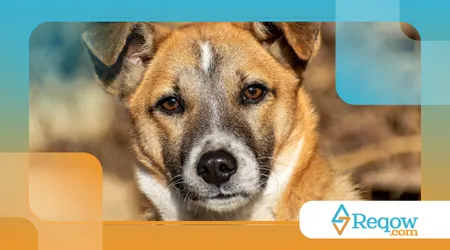
Comparison of Visual Behaviors
| Type of Look | Associated Body Language | Likely Meaning |
| Gentle and Relaxed | Tail wagging, body limp | Affection and oxytocin release |
| Fixed with Rigidity | Ears forward, fur standing on end. | Alert, focus on prey or aggression. |
| Lost/Empty | Head down, disoriented | Neurological problem or senility |
| Beggar | Licking his lips, sitting down | A craving for food or a walk. |
How to react to a dog's visual fixation
The best way to react is to analyze the environment and offer a response that validates the animal's need to communicate.
If the gaze is affectionate, reciprocating the contact positively reinforces the bond and promotes well-being for both. It's a simple exchange, but fundamental for the animal's mental health.
If you notice that the animal is trying to ask for something specific, try establishing a clear routine to reduce anxiety from waiting.
Dogs who know exactly when they are going for a walk tend to be less persistent in staring at their owners for hours on end.
Read more: Interesting facts about dogs and why they follow you around the house.
Punishments are counterproductive, as they can generate fear and break the trust established between you. If the gaze is intimidating, calmly shift the focus, offering a toy or changing rooms to break the tension without creating an unnecessary direct confrontation.
The breeds most prone to this behaviorWhy does a dog stare so intently?
Herding breeds, such as the Border Collie and the Australian Shepherd, have a genetic predisposition to focus their vision on specific targets.
They use their "eye" as a work tool to control herds, transferring this ancestral instinct to the living room sofa.
Companion dogs, such as Golden Retrievers and Labradors, also exhibit this characteristic to a pronounced degree due to their sociable nature.
They constantly seek approval and monitor every micro-expression of their owner's face to ensure they are integrated into the human "herd."
Regardless of race, positive reinforcement plays a crucial role in the frequency of this behavior.
++ Environmental enrichment for dogs: practical tips at home
If you always offer treats when stared at, the dog quickly learns that staring is the most efficient tool in its repertoire to get what it wants.
Understanding your dog's gaze is like learning a new language where silence carries more meaning than any bark.
Most of the time, this fixation is simply a reflection of the extraordinary evolutionary connection that unites our species. It's a constant reminder that, to them, we are the center of the universe.
Pay attention to the physical signs that accompany the gaze and prioritize the animal's emotional well-being. If you notice sudden changes or a look that seems to "pass through" you without recognizing you, seek a professional to assess the pet's neurological health.
For more technical details on animal behavior and health guidelines, visit the portal. PetMD, a global authority in veterinary medicine.

FAQ – Frequently Asked Questions
1. Is it true that I shouldn't look an unfamiliar dog in the eyes?
Yes, for animals without a bond, direct eye contact is often interpreted as a challenge or threat, and can trigger unexpected defensive reactions.
2. Can a fixed gaze be a sign of boredom?
Often, a dog stares at its owner simply because it lacks mental stimulation in its environment, seeking in its owner a spark of entertainment or immediate interaction.
3. Why does my dog stare at me while he's doing his business?
In this moment of physical vulnerability, the dog looks to you for protection, trusting that you will watch over the surroundings against potential predators or dangers.
4. How can you tell the difference between a look of affection and a look of hunger?
Affection emerges during moments of calm. Hunger is often accompanied by lip-licking, restless movement, and a strategic proximity to where food is stored.
5. What should I do if my dog starts staring at walls?
This behavior may indicate cognitive dysfunction or serious vision problems. Ideally, a check-up should be performed to rule out degenerative diseases typical of old age.