
Why do cats knead dough? See what it means.
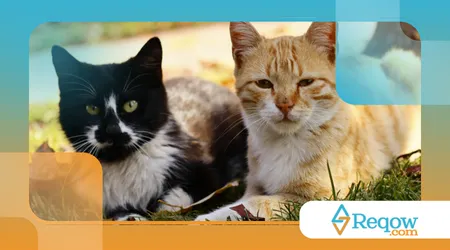
Have you ever noticed the almost hypnotic trance that takes over your feline when it finds a soft surface?
Advertisements
See Why do cats knead dough? It is to witness one of the most visceral and evolutionarily rich behaviors of these animals, going far beyond a simple domestic "charm".
Summary
- The echo of the savannah on the living room rug.
- The emotional refuge of breastfeeding
- The biophysics of digital glands
- Instinctive engineering: nest building
- Frequency and individual characteristics
- FAQ: Frequently Asked Questions
What defines the "kneading" motion?
Technically, this gesture is called "kneading." It is a rhythmic alternation of the front paws that, to the human eye, resembles a baker working dough, but from a biological standpoint, it is a tactile regression.
The animal enters a state of relaxation that shuts down its predator alerts.
This movement is a reflex remaining from the breastfeeding phase. By pressing on the mother's abdomen, the offspring physically stimulates the milk to let down.
Advertisements
In adulthood, the gesture survives as a kind of "muscle memory" of absolute security, activated whenever the environment offers thermal and emotional comfort.
The meaning of the gesture in the tutor's lap
When a cat chooses your lap for this behavior, it is essentially letting its guard down. There is something almost vulnerable about this act; it is a rare social surrender for a species that values independence so much.
He's not just looking for affection, he's reaffirming that you're part of his family group.
The process triggers a neurochemical cascade. Oxytocin is released into the animal's system, drastically reducing cortisol levels.
It's a mutual therapy: the cat calms down while, involuntarily, signaling to its owner that the environment is stable and free from external threats.
++ 7 Interesting Facts About Cats' Sleep
The invisible signature of the paws
We often overlook the fact that cats' paws are complex sensory tools. Their paw pads contain scent glands that release pheromones when pressure is applied.
By kneading a blanket or your arm, the cat is performing an extremely sophisticated olfactory territorial marking.
It's a way of saying, "this belongs to me and here I can relax." This chemical demarcation is vital for the pet's psychological balance, creating a trail of familiar scents that combat anxiety.
To understand the depth of this chemical communication, it is worth exploring studies on the... biology of animal behavior, which detail how the sense of smell guides felines' perception of safety.
The ancestral ritual before rest.
There is something architectural in the way a cat prepares its sleeping space. In nature, wild ancestors needed to "tame" tall vegetation, keeping away insects or potential dangers hidden beneath the grass.
The rhythmic movement served to create a protected and comfortable concavity.
Even when living in air-conditioned apartments, this genetic code remains active. The act of crumpling the pillow before going to bed is an inherited safety inspection.
Read more: Hairless Cats: Curiosities and Care for Sphynx and Other Breeds
It is instinct ensuring that the ground is firm and safe enough for him to enter REM sleep, the deepest and most vulnerable stage of rest.

Is there variation among individuals?
Although the behavior is universal among felines, the intensity varies according to personality, not necessarily by breed.
More "social" and dependent breeds, such as Siamese or Ragdoll cats, may exhibit this habit more frequently and may even accompany the gesture with slight salivation, a sign of extreme relaxation.
Cats rescued very young, who were weaned prematurely, tend to knead more vigorously, sometimes trying to "suck" on the fabric.
++ How to clean a cat's litter box without leaving an odor.
On the other hand, more rustic or reserved cats may perform discreet, almost imperceptible movements using only the tips of their claws.
Interaction Patterns and Well-being
| Context of the Gesture | Common Intensity | Psychological Indicator | Expected Reaction |
| Soft/Wool Blankets | High | Regression to Childhood | Deep purr |
| Direct Contact (Skin) | Average | Social Bond | A search for human warmth. |
| Nest Preparation | Low | Primal Instinct | Surface inspection |
| Stressful situations | Spasmodic | Self-comfort | Attempt at self-regulation |
Claw control during affection and why cats knead dough.
It's common for the excitement of the moment to cause the cat to extend its claws, which can be painful for the owner.
However, scolding the animal is a strategic mistake in training, as it would interpret the punishment as a rejection of your most affectionate gesture.
The smartest solution is to keep your nails trimmed regularly or use protective layers.
Using positive reinforcement, such as offering a treat when he crumples a neutral surface next to him, helps guide the habit without harming the emotional connection that the gesture represents.
When a habit signals something atypical.
Although it may be a sign of happiness, excess can mask emotional gaps.
If a cat spends hours obsessively kneading, neglecting feeding or playtime, it could be a sign of stereotypy—repetitive behavior caused by boredom or separation anxiety.
The secret lies in balance. In a healthy environment, the gesture appears as a pleasurable interlude between the day's activities.
Understanding these nuances is what distinguishes an ordinary pet owner from an attentive observer of the species' silent needs.
Recent findings in feline medicine show that animal welfare is intrinsically linked to the expression of natural behaviors.
To delve deeper into health and behavioral protocols, the World Small Animal Veterinary Association It offers technical resources that help to decipher the body language of these animals in a scientific and ethical way.
Frequently Asked Questions
My cat never kneads dough, is something wrong?
Not at all. Some cats simply express affection in other ways, such as headbutting or slow blinking. The lack of this habit is not a diagnosis of unhappiness, but rather an individual characteristic.
Why does he meow or drool while doing this?
Salivation is a classic sign that the parasympathetic nervous system is in control. The cat is so relaxed that automatic bodily functions, such as swallowing, take a back seat, reminiscent of the pleasure of sucking milk in infancy.
Is it true that only females do this?
This is a common myth. Both males and females retain the kneading reflex. The behavior is linked to the instinct for survival and comfort, which is independent of the animal's sex.
Could he hurt his own paws from kneading so much?
This is only a risk if there is obsessive-compulsive disorder or if the surface is abrasive. Under normal conditions, the paw pads are resistant enough to withstand the rhythmic movement without any injury.