
Scent games to stimulate a dog's mind.
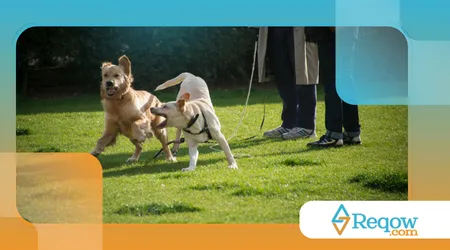
Scent games They represent the most natural and profound way to connect the dog to its ancestral instincts, promoting mental health and emotional balance in the home environment.
Advertisements
In this comprehensive guide, we'll explore how this practice transforms your dog's routine. You'll learn how to implement professional techniques to reduce anxiety, expend energy intelligently, and strengthen the bond with your best friend.
Summary
- What are olfactory games and how do they work?
- Why is sensory enrichment vital for dogs?
- What are the scientific benefits of sniffing?
- How can you start training your dog's sense of smell today?
- Table: Energy expenditure and difficulty levels
- Conclusion and FAQ
What are olfactory games and how do they work in practice?
You olfactory games These are environmental enrichment activities focused on stimulating the olfactory capacity of dogs to find rewards, such as treats, toys, or hidden people.
Unlike physical exercise, this practice requires intense cognitive processing, as the dog needs to isolate specific odor particles amidst environmental distractions.
A dog's nose has up to 300 million olfactory receptors, while humans have only 6 million.
Advertisements
When the animal uses this tool, the olfactory bulb, which is directly connected to the limbic system, is intensely activated.
This means that, when practicing olfactory gamesThe dog is not just "playing," but exercising the part of the brain responsible for emotions and memory.
The basic mechanics involve concealing the target and allowing the dog to use its exploratory scent. This activity releases dopamine, providing a feeling of pleasure and accomplishment.
It is an essential tool for dogs of all ages, from developing puppies to senior dogs with reduced mobility.
Why is sensory enrichment vital for canine well-being?
Many pet owners believe that only long walks will solve excess energy, but mental fatigue is often more effective.
Dogs that live in apartments or urban environments suffer from a lack of natural biological stimuli, which leads to destructive behaviors. olfactory games They fill this gap by offering a clear and rewarding purpose for the animal.
The science of animal behavior in 2026 reinforces that boredom is one of the biggest villains in modern veterinary health.
Without cognitive challenges, the dog may develop obsessive-compulsive disorder or separation anxiety. Implement olfactory games It creates a routine of predictability and success, where the animal feels capable and confident in solving complex problems on its own.
Furthermore, the sense of smell is the primary sense of canids, functioning as their main window to the world.
Read more: Training your dog to accept brushing and grooming without fear.
Denying the use of this sense limits the pet's perception of reality. By encouraging sniffing, we respect the physiology of the species, allowing the dog to "read" the environment in a healthy and controlled way.
What are the scientific benefits of sniffing for mental health?
Recent studies from universities specializing in animal behavior demonstrate that just ten minutes of olfactory games That's equivalent to almost an hour of brisk physical walking.
This happens because mental exertion consumes brain glucose at an accelerated rate. The dog reaches a state of deep relaxation after the activity, making it easier to rest.
Another crucial point is the reduction of cortisol, the stress hormone. Reactive or fearful dogs find in olfactory games A way to focus on something positive, ignoring negative external triggers.
This technique is widely used in behavioral rehabilitation protocols to increase the animal's emotional resilience and patience.
To understand more about sensory physiology and how dogs perceive the world, you can consult the guidelines of... Brazilian Federation of Animal Trainers, which details the importance of psychological well-being.
Sniffing also improves autonomy, as the dog learns to rely on its own nose to obtain satisfactory results.
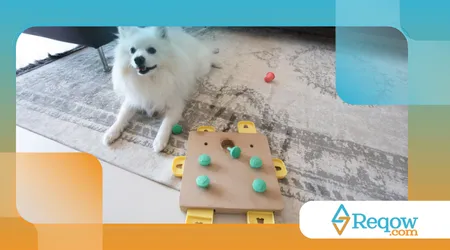
How can you safely start training your dog's sense of smell?
Start us olfactory games It does not require expensive equipment or complex search and rescue training.
The first step is the "search toy": hide a highly palatable treat under a plastic cup and encourage the dog to find it. As he understands the dynamics, increase the number of obstacles and the distance.
Use empty cardboard boxes to create an olfactory obstacle course in your living room or backyard. Place the treat in only one of the boxes, allowing the animal to investigate each one.
It is crucial not to give excessive verbal cues, allowing the dog to make the decisions and use its analytical skills.
Snuffle mats are excellent everyday tools, transforming mealtimes into one of the most enjoyable experiences. olfactory games more effective.
Look how interesting: How to deal with dogs that are possessive about food.
Instead of offering the food in a bowl, spread the kibble between the fabric strips. This extends feeding time and prevents digestive problems caused by eating too quickly.
Comparison of Activities: Energy Expenditure and Complexity
The table below presents a comparison between different types of stimulation to help you plan the ideal routine for your dog in 2026.
| Activity | Mental Effort | Physical Effort | Post-Workout Relaxation Level |
| Simple Walk | Low | Average | Moderate |
| Ball Chase/Retrieve | Low | High | Low (Generates Adrenaline) |
| Smell Games | Very High | Low | Very High |
| Obedience Training | Average | Low | Average |
| Search in External Environment | High | Average | High |
When should you introduce new challenges and variations to the games in Scent Games?
Progression in olfactory games It should be gradual to avoid frustrating the animal, while always maintaining a high level of interest.
If the dog solves the challenge in less than thirty seconds, it means the difficulty needs to be increased immediately.
Try hiding the prizes in high places or inside objects that need to be opened.
Variations like "Find It" in public parks are excellent for working on focus under distraction.
The external environment offers thousands of competing odors, making exercise much more challenging.
++ Small daily habits that make a dog feel loved and safe.
To practice olfactory games In different locations, this helps generalize behavior and strengthens the dog's confidence in new situations.
You can also use specific scents, such as pet-safe essential oils (lavender or chamomile), to train odor discrimination.
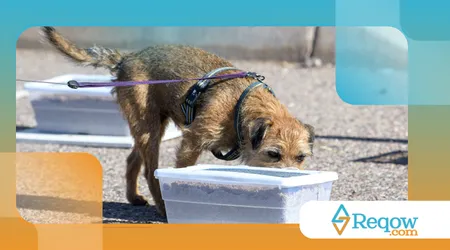
Teach the dog to identify a specific scent and reward it only when it indicates the correct source. This is the basis of... Nosework professional, a sporting modality that is growing globally.
Conclusion: Solving behavioral problems
You olfactory games They are the most versatile and powerful tool for any pet owner seeking a balanced and happy dog.
By prioritizing the mind, you solve behavioral problems at their root, resulting in a higher quality of life.
Investing just a few minutes a day results in a calmer, more focused animal that is deeply connected to you.
Remember that patience is key to success in any enrichment training. Each dog has its own pace of learning and discovery. Start today to transform your pet's nose into a portal of fun and health.
For technical information on animal health and behavior, please visit the portal of Federal Council of Veterinary Medicine.
Frequently Asked Questions
1. Which dogs can participate in scent games?
All dogs, regardless of breed, age, or size, can and should practice. Even blind dogs or those with reduced mobility benefit immensely, as the sense of smell is the sense that remains active and functional for the longest time in a dog's life.
2. How often should I perform these activities?
Ideally, practice short sessions of 10 to 15 minutes, twice a day. Consistency is more important than duration. Very long sessions can lead to excessive fatigue, causing the dog to lose interest in the game.
3. Can I use the daily ration in the scent games?
Yes, replacing the food bowl with sniffing activities is one of the best forms of enrichment. This simulates the natural foraging behavior (searching for food), making mealtimes a moment of instinctive satisfaction and expenditure of cognitive energy.
4. Do I need any special equipment to get started?
Not necessarily. While there are specific mats and toys on the market, you can use household items like rolled-up towels, cardboard boxes, and muffin tins. The owner's creativity is the only limit to creating new and stimulating olfactory challenges.